
Case Study: The Night Everything Burned Down: A $1.2M Deal, A Squatter's Fire, and the $560K Comeback
Sometimes the best real estate deals are the ones that fall apart first.
I need to tell you about the craziest deal I've ever worked on. And trust me, after years of doing multifamily acquisitions in Little Rock, I've seen some wild stuff. But this one? This one takes the cake.
Picture this: It's December in Little Rock, Arkansas. I've got an 18-unit apartment building under contract at 415 W 18th Street—literally two doors down from the Arkansas Governor's Mansion. Prime location. Solid bones. The kind of deal that makes you excited to wake up in the morning.
The price? $1.2 million. The potential? Even better.
When You Find a Diamond in the Rough (That's Being Horribly Managed)
Let me paint you a picture of what I was looking at.
This property was basically a value-add investor's dream. The previous ownership had—and I'm trying to be diplomatic here—absolutely horrific operational skills. High vacancy. Mismanaged units. Rents way below market. You know the type.
But here's the thing: 40% of the units were already renovated. The building had good bones. And the location? Come on, you're steps away from the Governor's Mansion in one of Little Rock's most desirable neighborhoods.
My initial underwriting showed:
- Going in at an 8% cap rate (decent for Little Rock multifamily)
- Stabilized value around $1.4 million once we cleaned up operations
- Room to push rents with proper management
- Immediate upside just from filling vacancies
This was supposed to be straightforward. Get in, stabilize operations, push rents, maybe finish renovating the remaining units. Classic multifamily value-add playbook.
Spoiler alert: Nothing about this deal would be straightforward.
The Domino Strategy: Trading Spaces Like Musical Chairs
The math started clicking into place. If this new tenant took the anchor space at 1090 Spencer, their old office 0.2 miles away would become vacant. The existing tenants at 1090 could be relocated into that building—filling 50% of the vacancy their move would create. It was like solving a Rubik's Cube in real estate form.
But here's where it got interesting: I could keep all the small tenants at their current rent rates. They weren't being squeezed or priced out—they were simply being repositioned into spaces that made more sense for everyone.
No rent increases for them meant no pushback, faster approvals, and goodwill that would pay dividends later.
The real value creation? The anchor space would command premium rates, and the strategic repositioning would transform the building's financial performance entirely.
But there was still a problem: we'd be trading one vacancy for another. The new building down the road would still be half-empty.
We needed one more piece to make this puzzle work.
Day 5: The Phone Call That Changed Everything
Five days into the contract period, I'm in the middle of inspections. Everything's moving along. And then my phone rings.
A squatter had broken into the building.
Now, if you've been in real estate for more than a minute, you know squatters are part of the game. It's annoying, sure, but it's usually manageable. You call the cops, file the paperwork, move on with life.
Except this squatter did something that changed the entire trajectory of this deal.
It was December. Arkansas winters aren't Minnesota-level brutal, but they're cold enough. This person, trying to stay warm, built a fire inside the building.
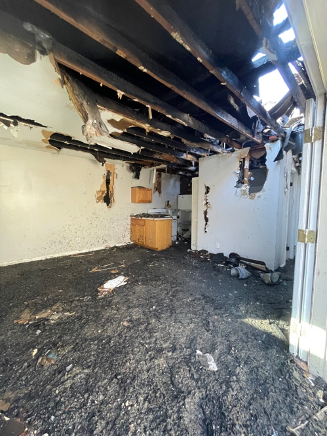
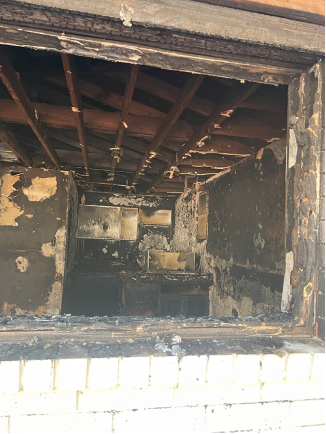
The entire property burned to the ground.
I'm not talking about fire damage to a few units. I'm not talking about some smoke damage and insurance repairs. I'm talking about a total loss. The kind of fire where you stand outside watching firefighters spray water on what used to be your deal while your entire investment thesis goes up in smoke—literally.
Eighteen units became twelve. The renovated units? Gone. My straightforward value-add deal? Now a disaster site with more red tape than a government office.
The 90-Day Battle: Insurance, City Officials, and Reality Checks
Here's what they don't teach you in real estate investing courses: how to underwrite a property that just burned down mid-contract.
For the next three months, my life became a blur of:
- Insurance adjusters with clipboards and bad news
- City fire inspectors citing code violations
- Structural engineers telling me what I already knew (it was bad)
- Contractors giving me demolition bids that made my eyes water
- And my lender, who very politely said, "Yeah, we're out."
The New Math
Let’s talk about the real impact of this strategic shuffle.
Let's talk numbers because this is where it gets interesting.
The seller, dealing with his own insurance nightmare, was willing to come down to $800,000. On the surface, that sounds like a huge discount—$400K off the original price.
But when you're doing actual real estate investing (not just watching YouTube videos about it), you have to underwrite reality, not hope.
Here's what my post-fire underwriting showed:
- Only 12 units remained (down from 18)
- Massive demolition and hazmat remediation costs
- Months of delays to get city approval for anything
- Significantly reduced income potential
- Way more renovation risk than originally planned
My numbers worked at $600,000—max. The seller needed $800,000 minimum.
That's a $200,000 gap. And unlike what you see on reality TV, you can't just "split the difference" when you're talking about fundamentals like cap rates and cash-on-cash returns.
I tried everything. Creative financing structures. Seller carry options. Different renovation approaches. Multiple contractor bids hoping someone would sharpen their pencil.
The deal died.
After three months of grinding, negotiating, and problem-solving, I had to walk away. It hurt—not gonna lie—but the numbers just didn't work.
Three Months Later: The Plot Twist
Real estate investing is weird sometimes.
Three months after walking away from the deal, my phone rings. It's the seller.
His listing agent's agreement had expired. He'd been sitting on this burned-out property, paying insurance, dealing with city complaints, watching his problem get worse. And he was frustrated.
"Hey, do you think you could help me sell this thing?"
Now, here's where most people might feel awkward. I'd already walked away from this deal once. We'd negotiated hard. It hadn't worked out.
But here's the thing about building a reputation in your local market: relationships outlast deals.
I'd stayed professional when we couldn't make it work. I'd kept in touch. I hadn't burned bridges or bad-mouthed him to other investors. And now, when he needed help, I was the person he called.
The Winning Play: Knowing Your Buyers
Instead of trying to resurrect the deal for my original buyer group, I did something
different.
I became the deal-maker instead of the buyer.
See, my original group wanted a relatively clean value-add deal. Get in, stabilize, push rents, refinance. They didn't sign up for a semi-demolished fire-damaged property with six months of complications in the rearview mirror.
But I knew other buyers in the Little Rock market. Buyers who specialized in distressed properties. Groups that had the experience, cash reserves, and—most importantly—the risk tolerance for a deal like this.
I made some calls.
The Final Deal That Actually Worked
We put together a new contract with a different buyer group:
- Purchase price: $560,000 (yes, even lower than my original $600K max)
- 12 remaining units post-fire
- $200,000 renovation budget
- Projected ARV: $1,000,000 after stabilization
Do the math: That's $240,000+ in equity after renovations and lease-up.
For buyers who know how to execute on distressed properties in Little Rock, this was a home run.
The seller finally got his problem property sold. The new buyers got an incredible value-add opportunity. And I got to make a deal happen that everyone said was dead.
What I Learned (The Stuff They Don't Put in Real Estate Books)
Black Swan Events Are Real
Look, I've done dozens of apartment building deals in Arkansas. I've seen inspections reveal foundation issues, mold, unpermitted work, you name it. But "squatter burns down the building five days into contract"? That wasn't on my due diligence checklist.
The lesson? Always underwrite with buffers. Always have exit strategies. The universe will test you.
Your Reputation Is Your Real Net Worth
I walked away from the first deal professionally. Didn't blame anyone. Didn't ghost the seller. Just said, "The numbers don't work, but let's stay in touch."
That relationship capital paid dividends when he called me three months later. In secondary markets like Little Rock, your reputation matters more than your capital.
Not Every Deal Fits Every Buyer
My original buyer group wasn't wrong for passing after the fire. They had specific investment criteria, and this deal no longer fit. That's okay.
The winning move was knowing enough buyers in the Little Rock market to match the right deal with the right capital. It's like dating—not everyone's compatible, but there's someone out there for everybody.
Patience Is a Negotiation Tactic
The seller needed time. He needed to sit with the problem, deal with the insurance headaches, watch the listing expire, and feel the carrying costs every month.
Three months of that was worth more than any negotiation tactic I could have used at month one. Sometimes the best thing you can do is stay patient and stay in touch.
Your Role Can (and Should) Evolve
I started as the buyer. I ended as the deal-maker. Both roles created value. Both roles deserved compensation.
Don't get so attached to how you thought a deal would work that you miss how it actually can work.